Mogged
- 0.0
- Rating
- 10.00K
- Installs
- Free
- Price

 Analysis by App-foxy
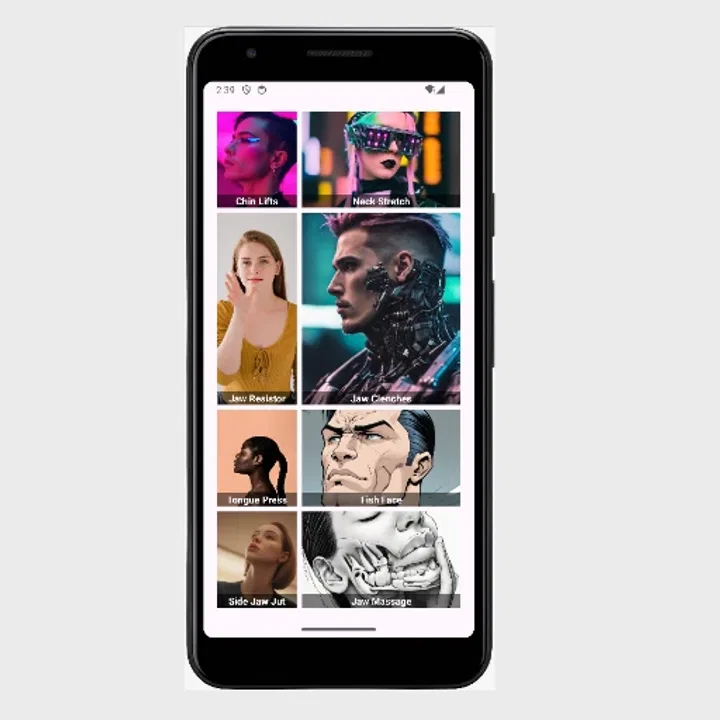
I approached Mogged as a small beauty app built around one very specific visual goal: helping users work toward a sharper-looking jawline. Its store wording is brief, so the useful question is not whether the promise sounds catchy, but whether the app gives you a clear, comfortable routine that fits real life. After spending time with it, my view is cautious but fair: it is easy to try, free to install, and aimed at people who enjoy simple appearance-focused routines, yet it should not be treated as a replacement for professional advice or as a guarantee of a physical transformation.
The app comes from Xeb Ltd and sits in the beauty category rather than fitness, medical care, or photo editing. That distinction matters. I found it more useful to think of Mogged as a lightweight self-care companion than as a scientific treatment. Its appeal is the narrow focus: instead of asking you to manage a complete skincare plan, nutrition schedule, or gym program, it keeps attention on the appearance of the jawline. For someone who wants a quick daily prompt, that simplicity can be a strength.
It is free, suitable for Everyone, and runs on Android devices using version 7.0 or later. The current release is version 1.1, and the app has passed the 10K+ installs mark. Its visible average rating is 0.0, which makes it difficult to use public feedback as a confidence signal. I would therefore judge it by what it lets you do directly, how much control it gives you, and whether its presentation encourages sensible expectations.
You May Also Like

 AccuWeather: Weather Radar
AccuWeather Review: A Quick, Clear Forecast for Everyday Decisions
For everyday plans, the best forecast is the one you can understand quickly. AccuWeather makes rain timing, radar, and local conditions easy to act on, with a few trade-offs.

 Hill Climb Racing
Why Hill Climb Racing Still Turns Crashes Into One More Run
A tiny car, a bumpy hill and one more upgrade: Hill Climb Racing keeps resurfacing because its simple chaos makes every near-miss feel personal.

 AliExpress - Shopping App
AliExpress Makes Global Shopping Feel Personal, but Shoppers Bear the Risk
AliExpress turns a global marketplace into a pocket-sized discovery engine. Its reach is useful, its shopping loop compelling, and its trade-offs easy to miss.

 Lords Mobile: Kingdom Wars
Lords Mobile Is a Kingdom-Building Routine, Not a Quick Match
A case-by-case verdict on the building, battles, device demands, and social commitments that make Lords Mobile rewarding for some players and exhausting for others.

 PDF Scanner app - TapScanner
TapScanner Makes Paperwork Easier to Capture, Check, and Share
TapScanner makes scanning with a phone feel less like a rescue operation and more like a dependable step in getting work done. Its capture tools are useful, though not flawless.

 Block Blast!
 Shows How Much a Puzzle Game Can Leave Out
A quiet grid game shows why puzzle players increasingly value instant clarity, repeatable skill and low-pressure play—and where the genre still needs to catch up.
More From Our News Desk
View All News


What using Mogged feels like in everyday life
The most realistic way to use an app like this is not to open it once, stare at a dramatic promise, and expect your face to change. I would place it into a small existing habit: after brushing my teeth in the morning, before getting ready for a video call, or during a short break when I want to do something focused rather than scroll. That routine keeps the app in its proper role: a reminder to pay attention to grooming and appearance, not a substitute for broader health habits.
Imagine preparing for a presentation or a social event. You have a few minutes, do not want a complicated workout, and mainly want to feel more put together. Mogged can serve as a simple prompt to check your posture, facial presentation, and consistency with whatever routine you have chosen. The benefit is psychological as much as practical: a short, repeatable action can make preparation feel more deliberate. The trade-off is that this kind of app can also encourage you to focus too intensely on one facial feature if you use it without perspective.
I recommend using a neutral baseline when judging progress. Take an occasional photo in similar lighting and from a similar angle if you genuinely want to compare appearance, but avoid checking constantly. Lighting, camera lenses, head position, facial expression, hydration, and even the time of day can change how a jawline looks. A useful insight here is that consistency of observation matters more than taking many pictures. Repeated close inspection can create the impression of change where there is only a different angle.
The app’s narrow subject may suit users who dislike large wellness platforms. Many alternatives combine workouts, meal tracking, sleep data, coaching, subscriptions, and social features. That broader approach can be useful when you want a complete plan, but it also brings more setup and more decisions. Mogged is easier to understand because its purpose is immediately apparent. If your goal is a full fitness transformation, however, a structured training app or advice from a qualified professional will be a better foundation.
A focused beauty tool, not a medical solution
I would be careful with the language of “sharpening” a jawline. Facial appearance is influenced by factors that a small app cannot control, including genetics, bone structure, body composition, age, posture, and camera perspective. Even a disciplined routine may produce a subtle or temporary visual difference rather than the dramatic result suggested by attention-grabbing beauty language.
This is also why I would not use Mogged to diagnose swelling, pain, difficulty moving the jaw, or any other health concern. Those situations belong with a doctor, dentist, or other appropriate professional. The app’s beauty focus does not make it a source of clinical guidance. If you have a jaw injury, temporomandibular discomfort, or a condition affected by facial exercises, it is sensible to get professional advice before trying any routine that places strain on the area.
For younger users, the Everyone age classification makes the app broadly accessible, but accessibility is not the same as suitability for every expectation. I would encourage teenagers especially to treat it as a casual grooming tool rather than a measure of attractiveness. The most responsible use is to keep goals modest, avoid painful effort, and stop if anything feels uncomfortable.
Trust starts with what the app visibly asks from you
When I review a beauty app, I pay attention to moments where it might request personal information, photos, camera access, account creation, or ongoing permissions. Those are the points where trust becomes practical rather than abstract. With Mogged, I would read every permission prompt carefully and ask whether the requested access makes sense for the action I am trying to perform. If a feature works without an account or without granting optional access, I would choose the more limited path.
I would also avoid uploading a face photo simply because an app makes the option feel convenient. A face image is sensitive personal material, and the decision to share it should depend on a clear explanation of why it is needed, how it is handled, and whether it can be removed. If those choices are not plainly presented at the moment of use, my preference would be to continue without sharing an image. A good beauty routine should not require surrendering more personal control than the task reasonably needs.
The same caution applies to notifications. A reminder can help create consistency, but constant appearance-related prompts may become irritating or unhealthy. I would keep notifications off at first, then enable only the type that supports a routine I actually want. If the app offers a choice between occasional reminders and frequent alerts, the less intrusive setting is the better starting point.
Because the visible rating is 0.0, I would not interpret the app as widely validated or widely criticized based on that number alone. It simply does not give me a useful public consensus to lean on. I would spend a few minutes examining the app’s own screens, permission requests, and account choices before deciding whether it deserves a regular place on my phone. That is a more reliable trust habit than assuming a beauty app is harmless because it looks simple.
Data-sensitive moments deserve deliberate choices
The most sensitive moment is any feature involving the face. If Mogged uses the camera, image selection, or visual analysis at any point, I would distinguish between temporary on-device use and uploading material to a remote service. Those are very different privacy situations. I would look for a plain explanation before proceeding, and I would decline access when the purpose is unclear or when the feature is optional.
Another important moment is signing in. An account can be useful if it preserves progress or settings across devices, but creating one also connects activity to an identity. If the app lets me use its central experience without registration, I would prefer that route. If registration is required, I would use only the information necessary for the account and avoid reusing a password from email, banking, or social media.
I would apply the same discipline to sharing. Beauty apps sometimes make it tempting to post progress images or invite friends into a challenge. That can provide motivation, but a public image may reveal more than intended, especially when it includes a recognizable face, location clues, or a consistent posting routine. My practical rule would be to keep any comparison private unless I have consciously decided that public sharing is worth the loss of control.
There is also a less obvious data-sensitive issue: emotional data. Even when an app does not ask for a name or photo, repeated use can influence how often you inspect your face and how you feel about small changes. I would set a limit on checking and use the app only when it supports confidence rather than anxiety. If opening it makes me more critical of my appearance every time, that is a clear sign to step away.
How to get value without overcommitting
My preferred workflow would be a short trial with clear boundaries. I would install the free app, inspect the opening experience, decline permissions that do not seem essential, and try the central routine without immediately creating an account or sharing images. I would then decide whether it offers enough practical value to justify regular use. This approach keeps the decision reversible and prevents a quick curiosity download from becoming an unnecessary data commitment.
I would also separate three goals that are often mixed together: feeling more prepared, improving posture or routine consistency, and changing facial structure. Mogged may help most with the first two as a motivational aid, while the third is much less predictable. Keeping those goals separate prevents disappointment. If I want a sharper appearance for a photograph, grooming, lighting, camera height, and posture may have a more immediate effect than repeating a facial routine.
One useful tip is to use the app alongside, not instead of, habits that have broader benefits. Regular sleep, balanced eating, hydration, general exercise, and sensible skincare affect how a person feels and presents themselves overall. I would not let a jawline-focused app encourage extreme dieting, painful exercises, or obsessive measurement. Its value is highest when it stays small and supportive.
Another trade-off is convenience versus depth. Mogged’s focused identity makes it approachable, but a narrow app may not explain the wider factors behind facial appearance. A reputable fitness platform may offer more context, while a dermatologist or dentist can address concerns that an appearance app cannot. Choosing the alternative depends on the question you are actually trying to answer: “How can I build a simple routine?” is different from “Why has my jaw changed?”
Who will enjoy it, and who should skip it
I can see Mogged working for someone who likes short, focused beauty routines and wants an uncomplicated place to begin. It may also appeal to users who are curious about jawline-focused habits but do not want a full social fitness ecosystem. The free price removes the financial barrier to trying it, and the broad age classification makes it accessible to a wide audience.
I would skip it if you expect guaranteed reshaping, detailed medical explanations, personalized clinical assessment, or a complete body-training program. I would also avoid making it a daily tool if you already spend too much time checking perceived flaws. In that situation, the app’s narrow focus could reinforce the very concern you are trying to reduce.
It is not the right choice for someone who wants strong evidence before changing a routine. The public rating does not provide much help in that decision, and the app’s beauty positioning should not be confused with professional validation. A qualified practitioner is the better option for pain, asymmetry that appears suddenly, swelling, bite problems, or any concern that affects normal function.
My cautious verdict after trying the concept
Mogged is best understood as a lightweight beauty companion with a deliberately narrow purpose. I like that its focus is easy to grasp and that a user can approach it as a small habit rather than a major lifestyle project. I also appreciate the possibility of using it without turning a simple grooming goal into a complicated dashboard of metrics and commitments.
My reservations are just as important. A sharper jawline is not an outcome an app can promise for everyone, and appearance-focused routines can become counterproductive when they encourage constant comparison. The lack of a useful visible rating signal means I would make my decision based on the actual experience, the clarity of permission requests, and the amount of control offered at each data-sensitive step.
For me, the sensible recommendation is to try it lightly, keep personal sharing to a minimum, and judge it by whether it supports a calm, repeatable routine. Do not use it for symptoms, do not push through discomfort, and do not measure your self-worth through its subject. If that modest role is what you want, Mogged is worth a careful look. If you need comprehensive training, medical guidance, or a proven transformation plan, choose a more specialized alternative instead.
FAQs for Mogged
01What is Mogged and what features does it offer?
Mogged is a dynamic fitness app designed to enhance your workout experience. It offers personalized training plans, video tutorials, and progress tracking. Users can also connect with a community of fitness enthusiasts for motivation and support. The app is suitable for beginners and advanced users, offering workouts across various fitness levels.
02Is Mogged available on both Android and iOS platforms?
Yes, Mogged is available for download on both Android and iOS devices. You can find it on the Google Play Store for Android users and the Apple App Store for iOS users, ensuring compatibility with a wide range of smartphones and tablets. Regular updates are provided to enhance functionality and user experience.
03Does Mogged require a subscription, and are there any free features?
Mogged offers both free and premium subscription options. While the free version provides access to basic workout plans and community features, the premium subscription unlocks advanced training plans, personalized coaching, and detailed progress analytics. Users can choose the plan that best suits their fitness goals and budget.
04How does Mogged ensure the security of personal data?
Mogged prioritizes user privacy and employs robust security measures to protect personal data. The app uses encryption to safeguard information and offers secure login options. Additionally, Mogged complies with international data protection regulations, ensuring that user data is handled responsibly and transparently.
05What type of support is available if I encounter issues with Mogged?
Mogged provides comprehensive customer support to assist users with any issues. You can access support through the app's help section, which includes a detailed FAQ and troubleshooting guide. For further assistance, users can contact support via email or live chat, where a dedicated team is ready to help.
Pros
- Intuitive user interface makes navigation easy.
- Wide range of customization options available.
- Regular updates enhance functionality and features.
- High-quality graphics improve user experience.
- Strong community support with active forums.
Cons
- Requires a stable internet connection to function.
- Some features locked behind a paywall.
- Can be resource-intensive on older devices.
- Occasional bugs reported by users.
- Limited offline functionality available.

Mogged
Gallery